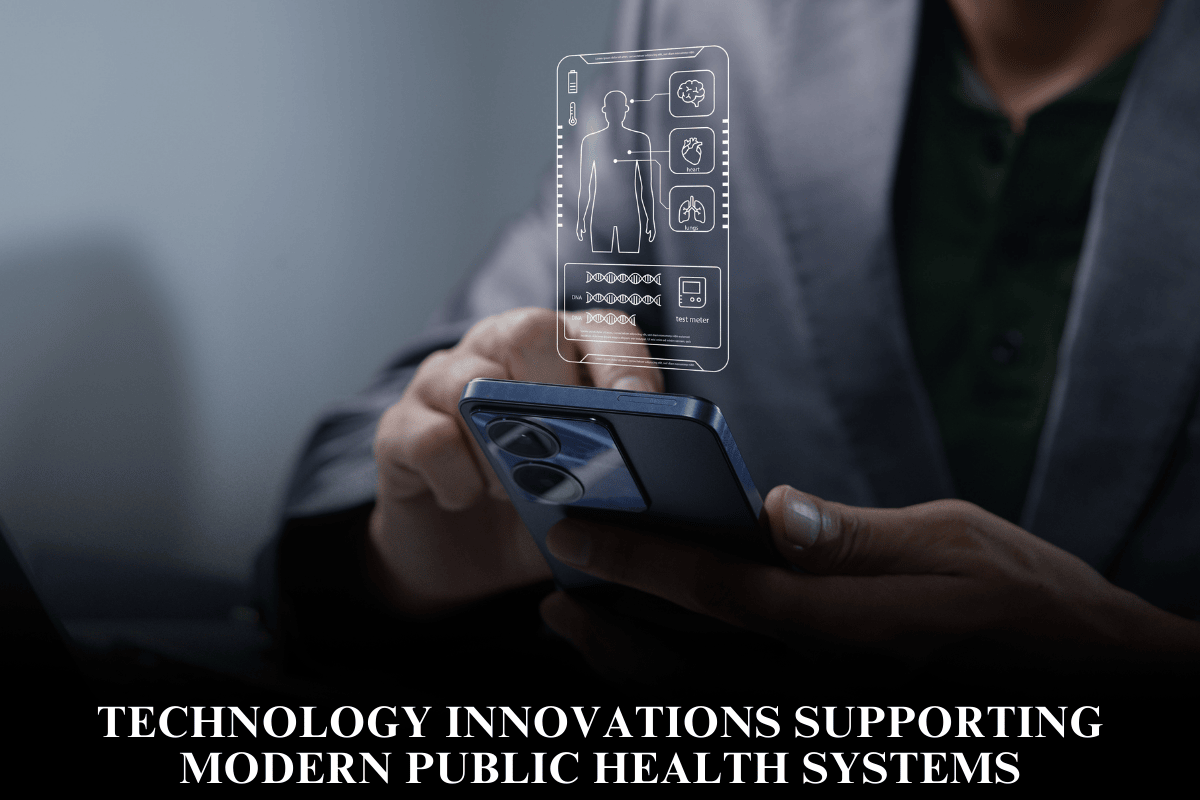
Technology innovations are revolutionizing public health systems by enabling predictive analytics, remote monitoring, and equitable care delivery at scale. From AI-driven diagnostics to virtual hospitals, these tools enhance outbreak response, chronic disease management, and resource allocation in real time.
AI and Machine Learning
AI scribes automate clinical notes from conversations, slashing documentation time by 50% and reducing clinician burnout. Predictive models analyze CT scans for early pneumonia or cancer detection, aiding understaffed labs. AI agents triage symptoms, schedule tests, and track adherence, freeing providers for complex cases.
Telehealth and Virtual Hospitals
Telemedicine evolves into virtual hospitals, like the UK’s NHS Online Hospital, serving remote patients with specialist access. 5G enables lag-free robotic surgeries and live ultrasounds from ambulances. Remote monitoring via wearables flags vitals changes, cutting readmissions for diabetes or heart patients.
Internet of Medical Things (IoMT)
Connected devices—wearables, smart dispensers, hospital trackers—stream data to EHRs for real-time alerts. IoMT supports chronic care in rural areas, integrating with AI for proactive interventions. Asset tracking optimizes equipment use, boosting efficiency amid shortages.
Immersive Technologies
AR/VR aids surgical planning, rehab, and mental health therapy for PTSD. VR trains nurses scalably, addressing workforce gaps. Patient education via AR visualizations improves consent and adherence.
Data Analytics and Blockchain
Big data dashboards map outbreaks, as in WHO trackers. Blockchain secures EHRs, enabling interoperability. Generative AI governance ensures ethical use in population health predictions.
Equity and Accessibility Gains
These tools expand care to underserved regions via mobile apps and low-cost wearables. Digital therapeutics manage conditions remotely, lowering costs. By 2026, AI copilots and connected ecosystems prioritize inclusive, data-driven public health.
FAQs
1. How does AI reduce burnout?
AI scribes handle notes, giving clinicians 2x patient time; predictive tools streamline diagnostics.
2. Virtual hospitals—real impact?
Serve 400K patients yearly (e.g., SEHA), cutting travel and enabling global expertise.
3. Privacy concerns with IoMT?
Encryption and blockchain secure data; regulations like HIPAA ensure compliance.
4. Cost savings from wearables?
Reduce readmissions 20-30%, manage chronic diseases remotely for billions saved.
5. Future for rural public health?
5G telehealth and AI extend specialists, bridging urban-rural gaps effectively.