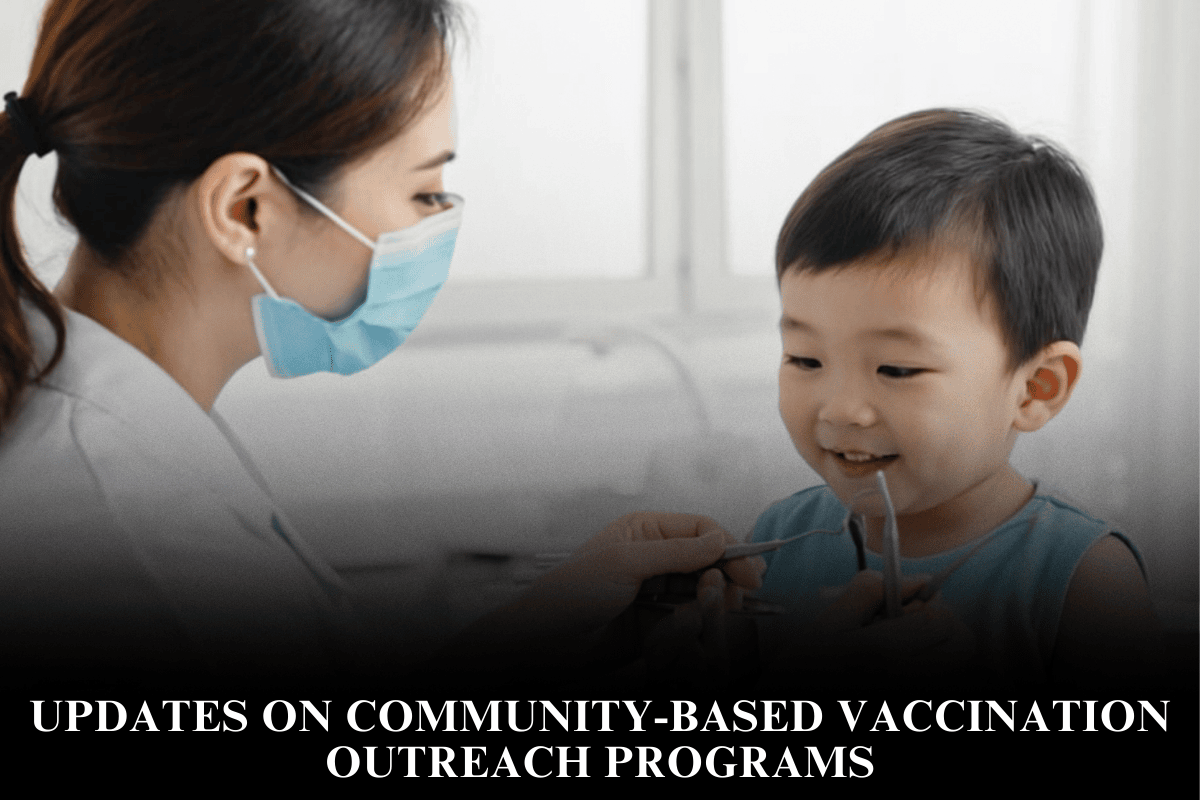
Community-based vaccination outreach programs have evolved significantly, focusing on equity, trust-building, and integration with routine immunization. Recent 2025-2026 initiatives emphasize catch-up drives, new vaccines, and localized strategies to boost coverage in underserved areas.
India’s National Campaigns
India launched the National Zero Measles-Rubella Elimination Campaign 2025-26 during World Immunisation Week, targeting 100% coverage with two MR vaccine doses for children. In February 2026, the “Swastha Nari” mission rolled out free nationwide HPV vaccination for girls aged 9-14 (single-dose), aiming to curb cervical cancer via schools, Anganwadis, and community health centers.
Intensified Mission Indradhanush (IMI) 5.0 caught up children under 5 and pregnant women, achieving near-98% full immunization in FY 2024-25 with six new UIP vaccines.
Global COVID-19 Lessons Applied
Post-pandemic research from UNICEF and Sabin shows community-led efforts in Zambia, Iraq, Ghana, and India boosted COVID-19 uptake by up to 25% via rapid assessments, trusted messengers, and human-centered design.
HRSA’s earlier $390M U.S. program funded 158 organizations for door-to-door outreach, mobile clinics at food banks, and culturally tailored education in minority communities. These models now inform routine drives, like Iraq’s 3iS outreach delivering 4.4M doses in 8 months.
HPV and Cancer Prevention Drives
UICC-funded projects reached 800,000 people, vaccinating 20,000+ against HPV through community-led access in low-resource settings. India’s HPV push, starting late February 2026, uses Ayushman facilities for free shots, partnering with schools and NGOs to hit 1.15 crore girls. Globally, IA2030 aligns these with universal access goals, emphasizing community health workers (CHWs).
Polio and Routine Immunization
GPEI’s 2026 Action Plan integrates polio with broader immunization, using door-to-door and digital tracking like India’s UWIN portal for real-time monitoring. Village Health Nutrition Days (VHNDs) and task forces (STFI/DTFI/BTFI) scale outreach in rural Haryana-like areas, focusing on drop-outs.
Tech and Engagement Innovations
Digital tools like UWIN and mobile apps enable tracking; RCCE (risk communication) deploys CHWs fluent in local languages for HBCUs, churches, and migrants. Human-centered strategies co-design with communities, addressing hesitancy via surveys and pop-ups. Gates Foundation supports supply chains for equitable delivery.
Challenges and Equity Focus
Hard-to-reach groups—migrants, rural poor, minorities—face barriers like misinformation; programs counter with trusted messengers and social mobilization. Backsliding from COVID hit routine coverage; 2026 drives recover via NIDs replication and media campaigns. Funding shifts to sustainable models beyond COVID grants.
Measuring Success and Future Outlook
Metrics show India’s 98% coverage and 25% uptake gains elsewhere; WHO’s EPI strengthens supply for campaigns. Future: IA2030 targets all communities by 2030, with community voices central via VARN networks. Logistics pros like in Panipat can aid transport for remote drives.
These updates highlight scalable, inclusive models closing immunity gaps worldwide.
FAQs
1. What is India’s 2025-26 MR Elimination Campaign?
A nationwide drive for 100% two-dose MR vaccination in kids to eliminate measles-rubella by 2026.
2. Details on India’s HPV program?
Free single-dose HPV vaccine for 9-14-year-old girls via govt facilities, schools, starting Feb 2026.
3. How did community approaches boost COVID vaccines?
Up to 25% increase via trusted messengers, outreach in India/Ghana/Zambia/Iraq.
4. Role of digital tools in drives?
UWIN portal tracks vaccinations; apps aid real-time monitoring and catch-ups.
5. What global framework guides these?
Immunization Agenda 2030 (IA2030) for equitable access by 2030.