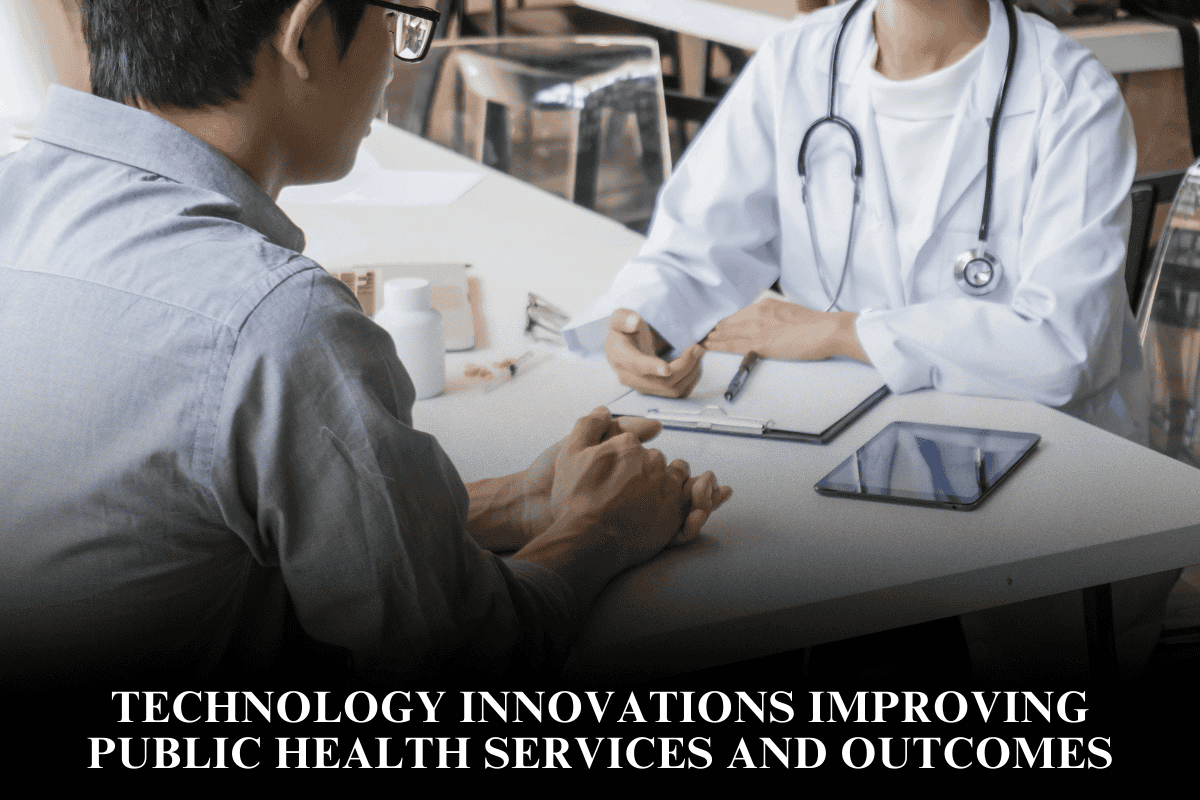
Technology innovations like AI, telehealth, and wearables are revolutionizing US public health services by enhancing access, prediction, and personalized care. These tools address workforce shortages, chronic diseases, and rising costs, improving outcomes nationwide.
AI as Intelligence Layer
AI integrates into public health via ambient documentation, predictive analytics, and triage, reducing clinician burnout and enabling early interventions.
In 2025-2026, generative AI summarizes patient data across sources, boosting deterioration prediction accuracy by up to 80% for early disease detection. US systems like CMS-backed programs leverage this for population health management.
Telehealth and Hybrid Care
Telehealth has stabilized post-pandemic as core delivery, blending virtual, in-person, and asynchronous care for primary and behavioral health. Hybrid models cut access barriers, with stable CMS reimbursements expanding reach in rural areas and for chronic management. Blockchain enhances security, making services tamper-proof and enabling fraud detection in credentials.
Wearables and RPM Expansion
Remote patient monitoring (RPM) uses AI wearables for continuous vital tracking, reducing hospital costs by billions annually. Devices detect atrial fibrillation 34% better and lower diabetes HbA1c by 1.3%, shifting to preventive care. Internet of Medical Things (IoMT) integrates data via FHIR for real-time alerts in home-based models.
Interoperability Standards
FHIR R4/R5 and TEFCA enforce data exchange, powering AI readiness and care coordination across US providers. This unifies clinical, claims, and device data, improving equity in public health outcomes. Cloud-native platforms enable nationwide sharing, vital for outbreak tracking and resource allocation.
Value-Based and Personalized Shifts
Automation handles RCM, scheduling, and gaps identification, supporting value-based care in ACOs and Medicare Advantage. Genomics and digital therapeutics personalize treatments, with wearables generating real-world evidence. Cybersecurity bolsters trust amid rising threats, ensuring scalable adoption.
Key Impacts on Outcomes
These innovations cut readmissions, enhance chronic management, and promote equity—e.g., RPM aids aging populations. US market growth to $81B+ reflects investments in hybrid platforms, projecting $6.2T spending by 2028 with efficiency gains. Challenges like privacy persist, but FDA plans and governance advance ethical deployment.
Future Horizon
By 2026, expect AI copilots in encounters, closed-loop insulin delivery, and multimodal prediction detecting infections 24 hours early. Cross-industry collaboration via Deloitte outlooks emphasizes digital health for resilient systems.
FAQs
Q. How does AI improve public health prediction?
AI analyzes wearables and EHRs for early warnings, like 80% better disease detection and cardiovascular risk reduction by 28%.
Q. What role does telehealth play in US equity?
It expands rural and underserved access via hybrid models with CMS reimbursements, secured by blockchain for trust.
Q. Are wearables clinically reliable?
Yes, studies show 34% more AFib detection and 1.3% HbA1c drops in diabetes, powering RPM infrastructure.
Q. How do interoperability standards help?
FHIR/TEFCA enables data liquidity for AI, coordination, and outbreak response across fragmented US systems.
Q. What challenges remain for adoption?
Privacy, regulations, and trust—addressed by FDA plans, zero-trust security, and transparent AI governance.