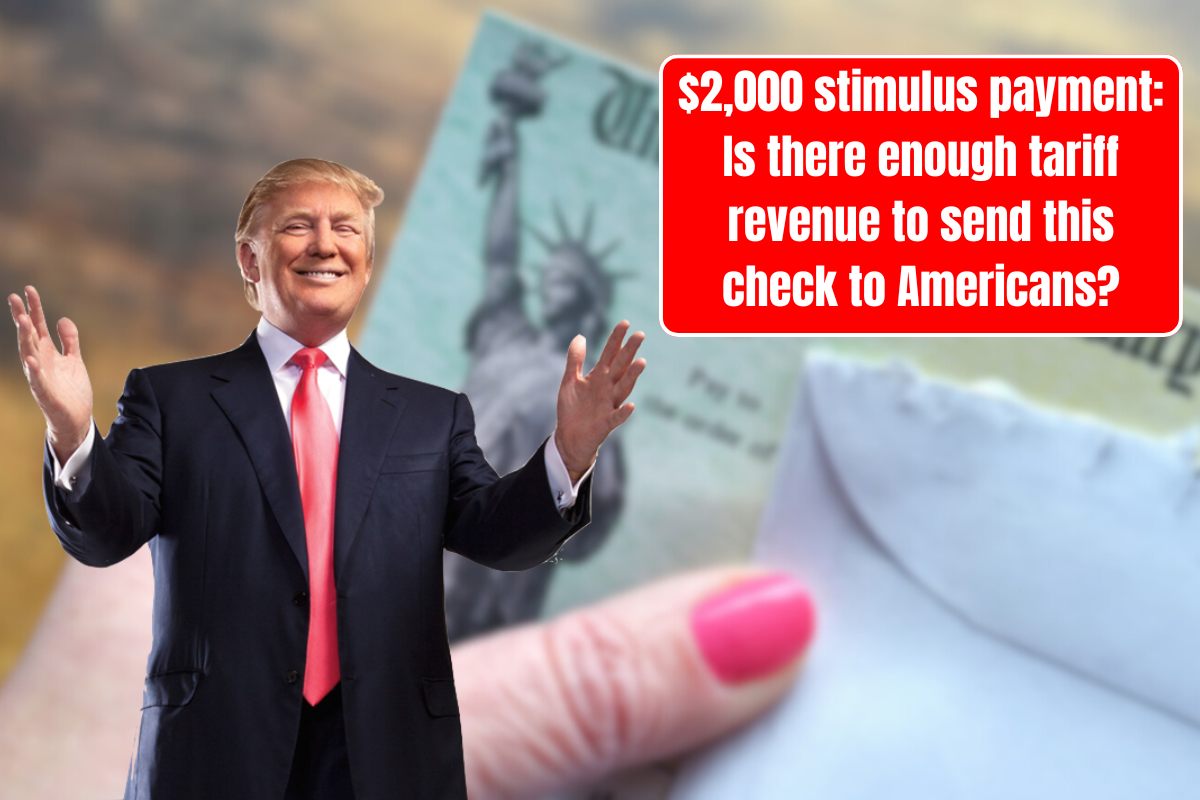
Donald Trump’s idea to give Americans a ₹2,000-equivalent cash dividend funded by tariffs has become a hot topic in the US. While it sounds attractive to many struggling with the high cost of living, experts are raising eyebrows over how it would actually work. Trump claims that the country is doing better under his policies—pointing to the stock market and low inflation—but the math behind this “tariff dividend” doesn’t add up so easily.
What Is Trump’s Tariff Dividend Plan?
Donald Trump’s plan proposes that most low- and middle-income Americans receive a one-time check of $2,000 (around ₹1.6 lakh). The money would come from the revenue collected through tariffs imposed on imported goods.
These tariffs are essentially taxes paid by companies that bring goods into the U.S. Trump believes this money can be used to support American families and reduce financial stress. But the plan is still a proposal and would need approval from lawmakers.
How Does He Plan to Fund It?
The funding strategy relies entirely on tariff income. Trump’s idea is to take all the money the government earns from tariffs and give it back to the public as a direct payment. The goal is to shift some of the financial burden caused by high prices back onto foreign exporters and importers.
In theory, it sounds like a way to balance the scales—collect money from international trade and return it to citizens. But in reality, things are a bit more complicated.
Is There Enough Tariff Revenue to Support This Plan?
Here’s where the plan hits a roadblock. Experts say the cost of sending ₹1.6 lakh (or $2,000) to 150 million Americans would come to about $300 billion in total. That’s a massive amount.
Now, while tariff revenues have been growing—around $195 billion was collected last year—not all of that comes from Trump-era tariffs. Only about $120 billion of that revenue is linked directly to the newer tariffs that he introduced. So even if all the tariff money was used, it wouldn’t be enough to cover the total cost.
Why Economists Are Concerned
Even though many voters might like the idea of receiving extra cash, financial analysts are worried. Their main concerns include:
- Inflation risk: Pumping that much money into the economy might increase inflation, making things even more expensive.
- Lack of budget support: There’s no clear way to make up the shortfall between the revenue and the payout cost.
- Political resistance: The proposal might not get approval in Congress, especially with tight budgets and rising debt.
The Political Angle
From a political viewpoint, Trump’s proposal could appeal to many Americans who feel left out of economic growth. It’s a populist move aimed at showing he’s focused on helping ordinary citizens. But critics argue that it’s more about winning votes than offering a practical solution.
What Happens Next?
For now, the idea remains a proposal. It would need to pass several political and economic hurdles before becoming reality. Even Trump’s support may not be enough if the numbers don’t work out.
Still, the plan highlights an ongoing debate in the U.S.—how to use government money to help people struggling with inflation and economic uncertainty.
In the end, while the idea of a “tariff dividend” sounds promising on the surface, it raises more questions than answers when you dig deeper into the details.