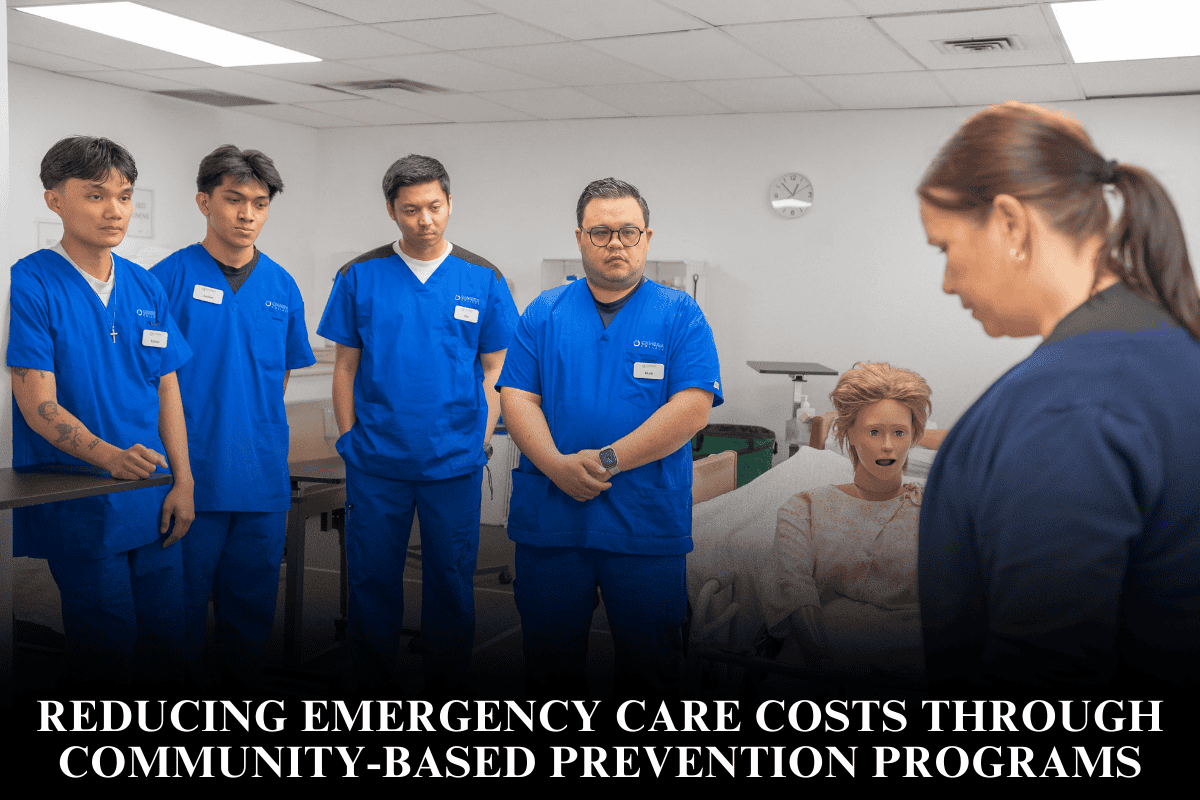
Community-based prevention programs offer a proven strategy to lower emergency care costs in the U.S. by addressing health issues before they escalate to costly hospital visits. These initiatives focus on education, screenings, and lifestyle interventions delivered through local partnerships, yielding significant savings for healthcare systems strained by chronic disease burdens.
Program Overview
Community-based prevention targets root causes like obesity, diabetes, and hypertension through accessible services such as free health fairs, tobacco cessation classes, and nutrition workshops. Unlike hospital-centric care, these programs leverage clinics, schools, and faith centers to reach underserved populations early.
The CDC’s Communities Putting Prevention to Work (CPPW) initiative, for example, invested in 50 communities, emphasizing tobacco control, better nutrition, and physical activity to curb chronic conditions driving 75% of U.S. healthcare spending.
Cost-Saving Mechanisms
These programs reduce emergency department (ED) visits and hospitalizations by promoting preventive behaviors. A $10 per-person annual investment in community efforts could save over $16 billion in five years, returning $5.60 per dollar spent through fewer acute interventions.
Studies show community management of severe acute malnutrition averts disability-adjusted life years (DALYs) at $23 each, far below inpatient costs of $1,344 per case. By shifting care upstream, programs cut primary care-related ED use, which inflates system inefficiency.
Evidence from Key Studies
CPPW’s $363 million across 44 communities yielded per-person costs under $5 for most tobacco, nutrition, and activity interventions, with obesity efforts dominating at $228 million. Aggregate reach data confirmed high efficiency, especially in point-of-decision prompts like healthier vending options.
A community care analysis reported 7 fewer hospitalizations per 1,000 people monthly, slashing inpatient costs by $289 per person—impacts strongest for those with 1-2 program encounters. Globally aligned U.S. models, like CMAM delivery via health workers, reinforce cost-effectiveness at $26-$53 per DALY averted.
Implementation Strategies
Successful programs partner with local health departments, employers, and nonprofits for scalability. Features include prospective cost tracking to minimize bias, in-kind contributions for sustainability, and MAPPS categorization (Media, Access, Point-of-decision, Price, Social support) to prioritize low-cost, high-reach tactics.
Tailoring to subgroups—e.g., frequent engagers needing pharmacy support—maximizes ROI while avoiding unintended cost hikes in total utilization. CMS’s Total Cost of Care models incentivize states via global budgets, holding providers accountable for population outcomes.
Challenges and Solutions
Upfront investments deter adoption, yet short-term savings often lag behind chronic disease timelines. Diabetes self-management education alone rarely bends costs without utilization-focused add-ons like navigation services. Solutions: Blend with policy changes (e.g., smoke-free zones) and evaluate via prospective data for real-world proof. Variability by community size demands flexible funding.
U.S. Policy Impact
Under President Trump’s 2025 health agenda, community prevention aligns with efficiency drives, potentially expanding via block grants. Programs like these support Medicare Advantage’s preventive focus, reducing ED reliance amid rising premiums. Long-term, they counter $4 trillion annual spend projections by fostering wellness in high-risk areas like rural Appalachia or urban food deserts.
Economic Projections
Scaling to 100 million Americans yields billions, with breakeven in 1-2 years for high-burden groups.
FAQs
1. How quickly do savings appear?
Most within 1-5 years via reduced ED use; chronic prevention yields compounding gains over decades.
2. Who funds these programs?
CDC grants, state budgets, CMS innovations, and private partners; CPPW exemplifies federal seed money.
3. Do all participants benefit equally?
No—1-2 encounters cut costs most; heavy users may need integrated care to avoid pharmacy spikes.
4. Can small communities replicate?
Yes, via low-cost MAPPS like promotions; average costs drop with scale but adapt for size.
5. Measure success beyond costs?
Track DALYs averted, utilization rates, and clinical outcomes like BMI; cost per DALY under $50 signals high value.